Entry · Ref NZR9EZ78
ADA Compliant Portable Commode Rental: Why Accessible Routes Matter
- Posted
- 2026-09-26
- Last amended
- 2026-09-26
- Account
- @zanderdzlu792
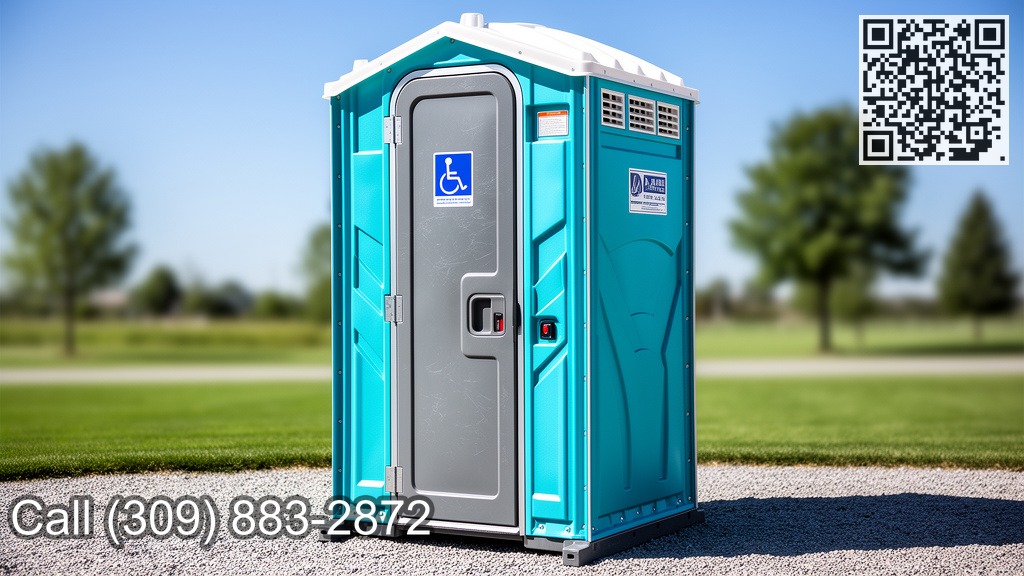
When individuals consider an ADA compliant portable toilet service, they usually envision the device itself. They ask whether the delay is larger, whether it has grab bars, whether it is labeled appropriately, whether it counts as an ada available mobile washroom. Those are essential questions, yet they are only part of the job.
The course to the device matters equally as much.
I have seen this missed out on in ways that are understandable and tough to excuse. A rental firm provides an ada compliant portable toilet. The event team feels eased because they inspected the box and ordered the appropriate version. Then the device gets positioned at the far edge of a field, behind a row of basic toilets, over soft ground, or at the end of a course with a lip or slope that makes independent gain access to tough or impossible. Theoretically, there is an accessible system on site. In practice, a guest still can not utilize it with dignity.
That gap between visibility and functionality is where most real-world access issues live.
A compliant device is not enough if the route fails
The regulating government requirement for this concern in the USA is the 2010 ADA Specifications for Accessible Style, as applied through the Department of Justice and analyzed by the Accessibility Board. For mobile units at temporary events and similar settings, ease of access is not limited to the inside of the bathroom. The available portable commode should also be attached by an accessible path and entryway. If a ramp or landing is needed, it has to fulfill the ADA's technological requirements.
That may seem noticeable, however in the area it obtains missed out on regularly since path preparation often happens late. A person chooses the commode financial institution location based on service vehicle access, event flow, fencing, or available open area. Just afterwards do they think about the ada portable toilet. Already, the easiest area may already be the worst spot for accessibility.
An ada compliant portable washroom is intended to function as part of a complete individual experience. A person needs to be able to approach it, enter it, utilize it, and leave it without encountering obstacles that the requirement is suggested to eliminate. If the course is broken, the bathroom is functionally broken too.
What the ADA actually expects in this setting
For collections of mobile single-user bathroom devices, at least 5 percent of the devices in each cluster must be accessible. The Gain access to Board has explained that this uses also at temporary occasions. That factor matters since some coordinators still assume short-term methods versatile. Momentary does not mean excluded here.
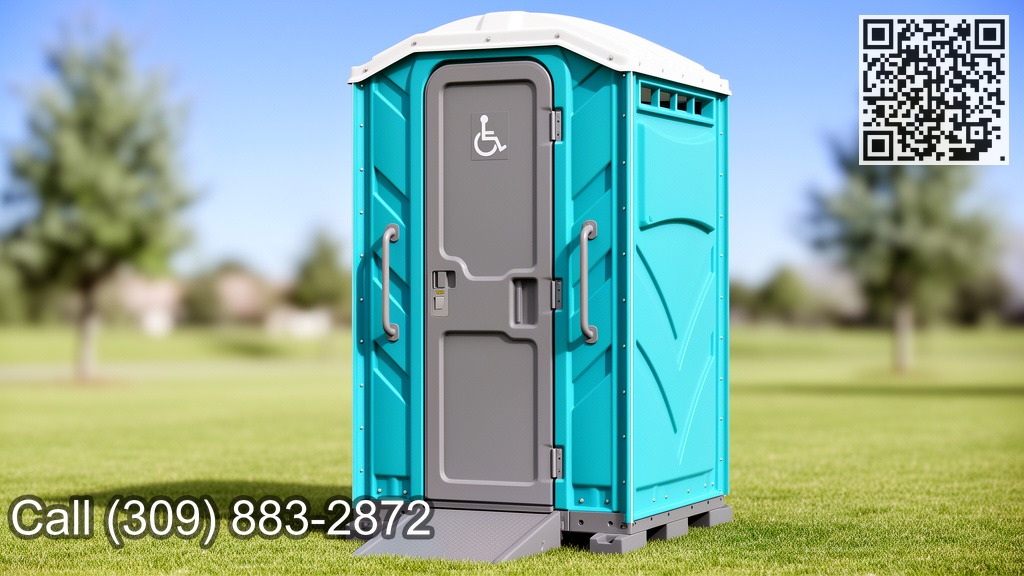
The easily accessible unit must be identified with the International Icon of Availability. Inside and at the entrance, the commode area still needs to meet applicable technological needs. Those consist of transforming area, component clearances, door maneuvering clearances, and the relevant grab-bar and water-closet clearance rules. In other words, an ada-compliant portable bathroom is not simply a bigger shell. It is a system designed around actual usage by people with disabilities.
And still, even that is not the complete story. The path to the device and the entry right into it become part of the requirement. That is what turns a compliant piece of equipment into a compliant installation.
There is one subtlety worth keeping in mind since it causes complication. The ADA requirements have historically dealt with some portable commode units at construction sites in a different way when those units are used exclusively by building workers. That slim distinction needs to not be stretched beyond its facts. For basic portable commode services, consisting of public occasions and comparable short-lived setups, the accessible-unit need continues to be securely in place.
Why easily accessible paths are where excellent purposes fail
Most access errors with portable toilets do not come from open negligence. They originate from fragmented planning. One team handles site layout. An additional takes care of leasings. Another manages operations. No one owns the path from the drop-off point to the door.
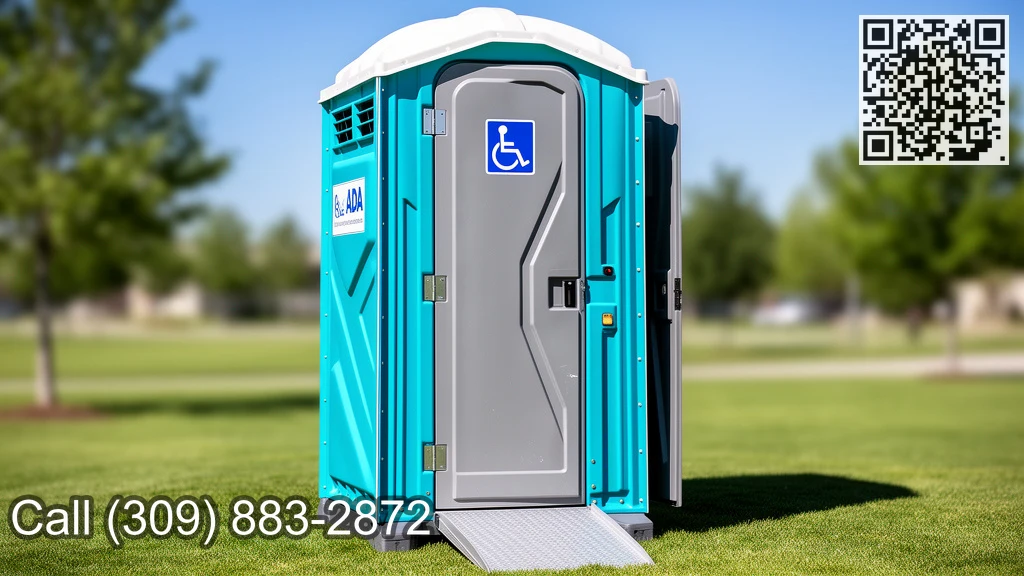
That route can fall short in subtle means. A placement might look close on a map yet be divided by irregular ground. A path might technically exist yet require somebody to strategy from the side or navigate around congested challenges. An entry might be obtainable just by going across a change that functions penalty for foot website traffic however not for a wheelchair customer. A ramp might be added with excellent purposes however without the landings or technical compliance the ADA requires.
These are not little information. They are the difference in between accessibility and exclusion.
There is also a human side that frequently obtains shed in conformity talk. If a guest, participant, worker, or member of the family needs to request for assistance simply to get to the bathroom, the trouble is currently larger than logistics. Toilet gain access to is fundamental, personal, and time-sensitive. Individuals should not have to bargain for it, wait on someone to relocate barricades, or look for a personnel that recognizes where the "special device" was placed.
The course becomes part of dignity
That may seem like soft language for a technological problem, however it is not. Dignity is what the technical guidelines protect.
Think about the distinction in between these two setups.
In the initial, an ada handicap available portable toilet is placed next to the main financial institution of units, on a path individuals are currently utilizing, with the entryway reachable without added support. It is identified correctly, easy to locate, and integrated into the site like any type of various other necessary service.
In the 2nd, the ada portable toilet is available only if a person goes across a rough temporary surface, goes around the back of a fenced location, and comes close to an entrance from an awkward angle. There might be a certified model on website, yet the individual who needs it is still being separated from every person else.
The regulation addresses accessibility, but people experience inclusion.
Temporary occasions do not get a pass
One of one of the most consistent myths in mobile sanitation is that short-term arrangements are in some way evaluated by a looser standard. They are not, at the very least not in the general sense numerous organizers think. The Gain access to Board's support explains that the 5 percent accessible-unit demand for collections applies even at momentary events.
That has sensible effects. A weekend festival, a community fundraising event, a reasonable, a pop-up activation, a short-term place development, or an outside party still needs to think of obtainable positioning. Short duration does not erase the requirement for an accessible route. If anything, short-lived sites require even more attention because they are more probable to be constructed quickly on imperfect ground with improvisated circulation patterns.
I have located that short-term sites are also where access gets dealt with as a late-stage adjustment. Somebody understands the day prior to opening up that they need an ada compliant mobile toilet rental, so the distributor sends out one, and everybody presumes the issue is fixed. Then, however, the website layout might already be fixed. The obtainable device winds up in whatever gap is left.
That is a planning failure, not an item failure.
What occupants and website supervisors must verify prior to placement
If you are arranging ada compliant portable toilets, the essential concern is not simply "Did we rent the best system?" It is "Can an individual in fact get to it and use it under real conditions?"
A short pre-placement check generally catches the most significant blunders:
- Confirm the amount of systems are in each collection and whether a minimum of 5 percent of that cluster will certainly be accessible.
- Make sure the available device is clearly identified with the International Symbol of Accessibility.
- Walk the route to the entry, not just the decrease area, and look for obstacles that would interrupt easily accessible travel.
- If a ramp or touchdown is needed, treat it as an ADA compliance item, not an improvisated add-on.
- Verify that the device's entrance and indoor problems support the needed handling and clearances.
That checklist sounds simple due to the fact that it is simple. The difficulty is doing it early sufficient that placement can still be changed.
Clusters matter greater than many individuals realize
The requirement puts on each collection of portable single-user commode systems, not simply to the total number rented out throughout an entire event or site. That information matters in the area since coordinators frequently spread out systems right into separate banks for convenience.
Imagine an occasion with numerous commode areas. If there is one large central collection and a few smaller satellite clusters, access can not be addressed by filling all accessible devices right into the primary area while leaving the smaller clusters without gain access to. The 5 percent guideline applies at the cluster degree. Also without getting shed in mathematics, the takeaway is clear: each organizing requires its very own accessibility review.
This is just one of those issues that often tends to amaze people who assumed a sitewide overall sufficed. It commonly is not.
The interior demands are not optional details
There is a tendency in rental conversations to utilize terms like ada mobile bathroom and ada-compliant portable bathrooms as if they merely explain a larger version. The ADA criteria are extra particular than that.
The unit need to meet applicable toilet-room technological needs. That includes transforming space, component clearances, door maneuvering clearances, and appropriate rules for grab bars and water-closet clearances. These are not cosmetic functions. They impact whether the user can place, transfer, and operate the space.
That matters when a customer stores on tag alone. Not every huge portable commode is always an ada certified mobile commode. Not every system advertised delicately as obtainable will certainly satisfy the technical demands that govern certified installments. The distinction is very easy to miss if the discussion is driven entirely by supply names as opposed to actual conformity needs.
This is why seasoned customers have a tendency to ask more difficult concerns. They want to know not just what the unit is called, however whether it is being offered and installed in a way that straightens with ADA requirements.
The route outside the door usually figures out whether the system operates at all
A portable device can be totally compliant as produced and still fail the user because of where and exactly how it is put. That is the uncomfortable truth in lots of accessibility disputes.
The path can break down prior to an individual even gets to the entrance. The entryway can break down if approach area is endangered. A ramp can damage down if it exists in name just yet does not please technical demands. As soon as that takes place, it does not matter how excellent the indoor transforming room is. The user is quit in the past those attributes become relevant.
I have seen groups focus heavily on the spec sheet and virtually not at all on method conditions. That is reasonable because product specs are very easy to document. Course use requires judgment, site awareness, and sometimes a determination to challenge a convenient design. However if you are trying to give a genuinely usable ada compliant easily accessible mobile bathroom, that initiative is nonnegotiable.
Accessibility is entering into a more comprehensive conformity culture
There is a larger context below too. ADA compliance is not diminishing into a niche worry. It is coming to be a lot more noticeable across markets, including electronic access and public service delivery. Recent federal advice influencing web and mobile availability deadlines for state and local government entities is one sign of that wider environment. The specifics of electronic compliance are various from portable hygiene, but the sensible lesson is comparable: ease of access assumptions are active, evolving, and progressively hard to treat https://andyhpbc685.theburnward.com/ada-mobile-toilet-availability-what-rental-providers-and-clients-required-to-know as an afterthought.
For website drivers, location supervisors, towns, colleges, and occasion manufacturers, that should be a wake-up phone call. Availability is no more something you deal with just when a person complains. It belongs to responsible procedures. When people look for an ada portable bathroom leasing, they are often trying to fix greater than a procurement issue. They are trying to satisfy a legal responsibility and a basic requirement of care.
Common judgment calls that are entitled to even more attention
Not every website is very easy. Some areas are constrained, sloped, crowded, or short-term in a manner that makes every placement imperfect. That is precisely why judgment matters.
Here are a couple of scenarios where experienced preparation makes a distinction:
- A device positioned near service gain access to may be easier to maintain, but if that route is much less available for users, benefit for pumping should not automatically win.
- A remote corner may really feel much less visually invasive, yet moving the ada accessible mobile toilet away from the main blood circulation can produce seclusion and path problems.
- A last-minute ramp may look like a fix, yet if it does not comply with ADA technological demands, it can produce incorrect confidence instead of access.
- Spreading devices equally around a site can aid group control, yet each collection still needs its very own accessible thinking.
- Labeling a system as easily accessible helps individuals find it, however signage can not compensate for an unattainable path.
What attracts attention in these situations is that access hardly ever stops working due to the fact that no one cared. It falls short due to the fact that another priority silently bypassed it. Service, looks, group flow, protection, or rate took the lead, and access obtained squeezed right into whatever room remained.
Language issues, yet efficiency matters more
The market uses a lot of overlapping phrases: ada compliant portable bathrooms, ada-compliant mobile restrooms, ada certified accessible mobile bathrooms, ada mobile bathroom, ada-compliant mobile toilet. The majority of clients are just looking for the appropriate thing, and search language tends to obscure differences. That is normal.
But the safest means to consider it is this: the expression ought to explain a toilet setup that really works under ADA guidelines, not simply a design name in a magazine. A compliant installation consists of the appropriate variety of easily accessible units in each cluster, proper recognition, the needed interior and entryway conditions, and an available path. Overlook any of those pieces and the expression begins to shed its meaning.
That is why easily accessible routes deserve a lot focus. They are typically the least visible part of the setup process and one of the most decisive component of the customer experience.
Planning very early is the easiest type of compliance
If there is one useful lesson I would certainly continue any type of organizer, it is to manage accessibility before the site plan hardens. When fencing, vendor booths, phases, solution lanes, and group networks are repaired, the toilet area comes to be much tougher to deal with. Early intending gives you options. Late intending gives you compromises.
This is specifically real when numerous clusters are included. It is much easier to make each commode location with availability in mind than to retrofit one obtainable unit into a website that was set out for speed alone. When teams do this well, it barely really feels remarkable. The available restroom exists, plainly significant, and reachable. Nobody has to improvisate. No one needs to apologize.
That is how it needs to feel.
The actual test is simple
A person approaching an ada certified mobile bathroom ought to not have to ask yourself whether the path is suggested for them. They need to not need to ask approval, wait for aid, or attempt a route that can bypass effortlessly. If the unit is really available, the route will claim so prior to the indicator does.
That is the heart of this issue. An ada certified portable bathroom service is not only regarding buying the right system. It has to do with putting that system where ease of access is real. The standards identify that truth. Excellent operators do as well. And for individuals who rely upon those bathrooms, the difference is prompt, sensible, and deeply personal.
 Ask ChatGPT
 Ask Grok
 Ask Perplexity
 Ask Claude
 Ask Google AI
 Ask You