Entry · Ref COYSNXSW
ADA Portable Commode Requirements and Ease Of Access Recognition Described
- Posted
- 2026-10-04
- Last amended
- 2026-10-04
- Account
- @zanderdzlu792
Portable bathrooms tend to be dealt with as a last-minute line thing, right up until somebody shows up on site and can not make use of the centers. That is normally when the genuine price of poor planning turns up, not just in frustration, yet in exemption. If you take care of occasions, public projects, church functions, parks, school tasks, emergency situation response sites, or any place where an ada portable bathroom belongs to the plan, accessibility can not be an afterthought.
I have seen this concern misconstrued in 2 various methods. In some cases individuals presume that leasing one larger device immediately addresses every little thing. Various other times they focus on the unit itself and forget the course to it, the ground around it, the signs, or the means the door actually functions once it is provided and positioned. The ADA does not treat ease of access as a sticker label on the side of a washroom. It treats it as useful access.
That difference issues. A toilet can be marketed as an ada easily accessible portable washroom or an ada certified mobile bathroom, yet still stop working in technique if it is put on an unattainable surface area, obstructed by group barriers, or embeded in a cluster without any appropriate easily accessible recognition. The objective of this write-up is to make the government demands less complicated to understand without squashing them into simplistic sales language.
The policy that controls mobile bathroom accessibility
For mobile toilet rentals in the USA, the regulating government access requirement is the 2010 ADA Standards for Accessible Design, as analyzed by the U.S. Gain Access To Board and the Department of Justice. That is the baseline framework people should be using when they talk about ada mobile bathroom requirements.
This is where some complication begins. Vendors, organizers, and site supervisors typically use terms like ada compliant portable restrooms, ada-compliant mobile bathrooms, or ada handicap available portable toilet reciprocally. In normal conversation, that is easy to understand. In method, however, the tag matters less than whether the installation really lines up with the ADA standards.
The federal standard does not quit at the concept that an obtainable portable device must exist somewhere on the residential or commercial property. It resolves the amount of available systems are needed in a cluster, just how those units are identified, and whether a person can approach, get in, and use them. That suggests compliance is both about amount and usability.
If you are setting up an ada mobile bathroom service for the public or for program individuals, the safer state of mind is easy: do not ask just, "Did we rent out an available system?" Ask, "Can an individual who requires it find it, reach it, enter it, and utilize it with self-respect?"
How several easily accessible systems are required in a portable toilet cluster
One of the clearest policies in this location is the 5 percent demand. For collections of portable single-user toilet systems, at least 5 percent of the units in each collection need to come. The Access Board has explained that this applies also at momentary events.
That point is easy to miss out on because short-term websites frequently get dealt with as if they run under looser assumptions. They do not. A weekend break festival, a seasonal fair, a community charity event, or a short-lived field office might be short in period, yet the availability obligation does not go away since the setup is temporary.
The word "collection" is additionally vital. It is insufficient to look throughout an entire big residential or commercial property and say there is one obtainable unit somewhere. The requirement applies to each collection of mobile single-user units. If your site has several washroom groups spread throughout a location, each grouping have to be assessed on its own.
This is where experienced preparation assists. A website can show up certified on paper and still produce obstacles in real life if the available units are focused as well much where people are really collecting. The government rule in the verified context talks with the cluster demand. Profundity goes one action better and asks whether the positioning supports practical access for the people anticipated to make use of the site.
Temporary occasions are not a free pass
This is just one of one of the most typical misunderstandings I hear. Individuals assume access standards loosen up when the toilets are on trailers, provided for a weekend break, or placed for a single public event. The Access Board's interpretation says otherwise. The 5 percent accessible-unit policy uses also at momentary events.
That issues for organizers that are juggling permits, group circulation, cleanliness, waste service, and a lengthy listing of vendor deadlines. It is easy to deal with the bathroom order as a commodity acquisition. But once participants of the public are involved, specifically in a short-term occasion setup, ease of access needs to be reviewed early, not at the end.
I have actually seen the functional difference this makes in public-facing operations. When ease of access is considered early, the positioning typically functions much better for everybody. Paths are more clear. Lines up are less disorderly. Personnel are not rushing to relocate fencing or plywood after complaints been available in. The occasion really feels extra inviting due to the fact that it is more usable.
By comparison, when someone orders a financial institution of common systems and tries to resolve availability on delivery day, the solutions are usually awkward or insufficient. An ada certified portable bathroom can just do its job if the bordering configuration appreciates the same requirement of access.
Identification is needed, not optional
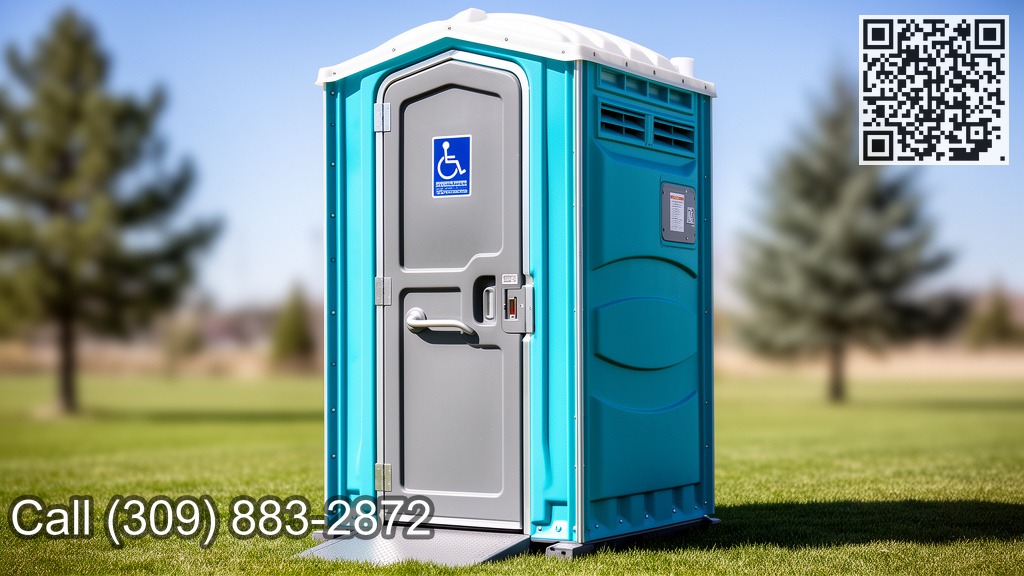
Accessible mobile toilet devices have to be identified with the International Icon of Accessibility. That requirement is direct, and it offers a functional objective. An individual seeking the available device should not have to evaluate each bathroom one by one or ask staff for help.
This appears simple, yet it gets neglected surprisingly commonly. At busy sites, especially when units are presented swiftly, labels might be obscured, missing out on, or put where they are hard to spot. Often the device is practically the accessible one, however nothing in the line of bathrooms makes that clear from a distance. That develops complication and can compel unnecessary communications that many people prefer to avoid.
Identification does greater than please an official guideline. It supports self-reliance. Good ease of access layout minimizes the amount of additional effort a person needs to invest just to do what every person else is doing.
If you are examining ada compliant obtainable portable restrooms, this is one of the most convenient information to inspect visually. Is the device clearly noted with the International Sign of Access? If the solution is no, the installment is missing a required piece.
The route to the system matters as much as the system itself
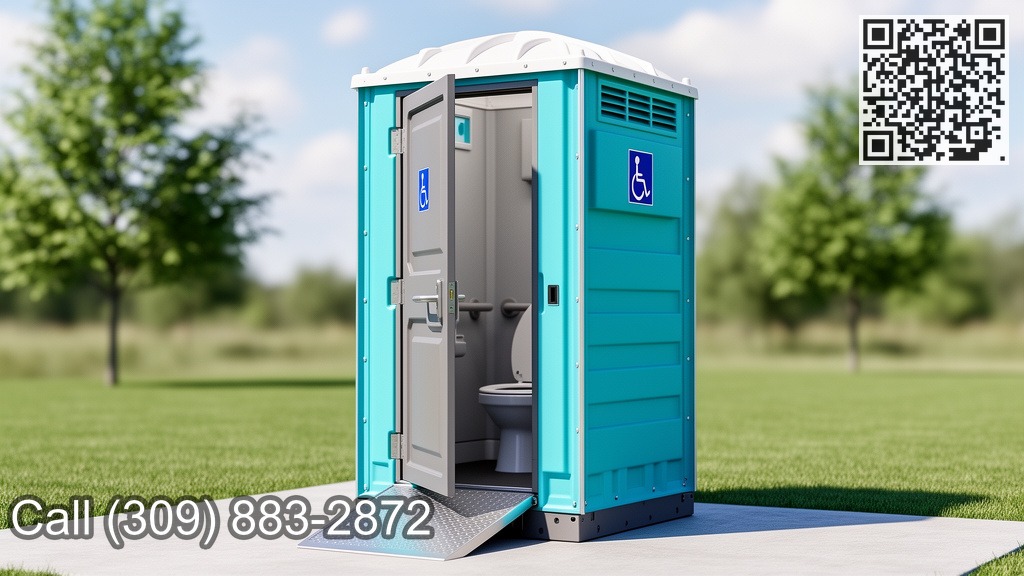
A great deal of compliance issues have nothing to do with the toilet inside. They begin outside. Portable obtainable units must have an available course and entryway, and any kind of required ramps or landings must comply with ADA technological requirements.
This is where availability usually damages down in the field. The device gets provided properly, yet it is put on soft ground after rain, beside a steep strategy, beyond a visual without any compliant change, or behind short-term obstacles that narrow the course. On paper, the website has an ada mobile restroom. Being used, it does not.
The path is not a side problem. If a person can not get to the device without crossing unpredictable ground or discussing an unattainable strategy, the available function inside the washroom ends up being unimportant. Ease of access begins before the door.
For short-lived websites, this indicates looking carefully at where the toilet collection is being positioned. A hard, secure arrangement area and a functional course of travel are not high-ends. They become part of what makes an ada-compliant mobile commode actually obtainable in practice.
The entryway matters also. If a ramp or touchdown is necessary, those elements need to meet ADA technological needs. The verified context does not offer exact measurements, so I will certainly not develop them below. The vital point is that ease of access is not satisfied by improvisating a makeshift board, a high system, or a muddy spot that personnel think is "good enough for eventually." If a ramp or touchdown is needed, it needs to comply.
Inside the unit, technical needs still apply
Portable systems are mobile, yet they are still bathroom areas for ADA functions. The units should meet toilet-room technical requirements, including component clearances, turning room, and door handling clearances, along with suitable grab-bar and water-closet clearance rules.
This is why a bigger footprint alone is not nearly enough. People occasionally think that if a mobile restroom looks roomier than a conventional unit, it should be certified. That is not a risk-free presumption. Extra interior space is not the very same thing as the needed clearances and steering conditions.
Door maneuvering can be particularly disclosing. An unit might be marketed as available, however if the means the door features or the bordering placement hinders useful use, the advantage of the bigger unit is minimized. The same goes for transforming room and the placement of indoor features. Availability relies on exactly how the entire area works together.
This is one reason that experienced buyers do not rely only on item tags. They confirm that the unit being given is meant to meet ADA-accessible usage and after that make sure the supplied configuration does not undermine that style. For any individual keywords like ada certified mobile toilet or ada compliant portable commodes, that is the real concern. Compliance is about conditions of use, not simply a group name in a rental catalog.
The exemption people misinterpreted on building sites
Construction settings produce a regular area of confusion. The ADA Requirements differentiate portable commode units at building and construction websites made use of specifically by building employees, and the cited 1991 typical includes an exemption from the portable-toilet accessibility scoping requirement for those units. That is a narrow point, and it ought to not be stretched past what it says.
The crucial phrase is used solely by building employees. Individuals usually hear there is a construction-related exemption and after that presume mobile bathrooms at any kind of active jobsite do not require to be obtainable. That is too wide. The validated context supports only the restricted distinction defined above.
For basic mobile bathroom rentals, the accessible-unit need continues to be. So if the site problems or public use move outside that narrow construction-personnel-only context, it is dangerous to lean on the exemption casually. This is just one of those areas where overconfidence creates preventable mistakes.
In functional terms, if a website is public-facing, mixed-use, or serving attendees past construction staffs, it is a good idea to assess it under the basic availability need instead of presuming a covering exemption exists. The verified realities sustain a slim exception, not a general getaway hatch.
What to confirm before distribution day
A brief testimonial before the truck arrives can prevent most access failures. You do not need a remarkable procedure, but you do require to look beyond the rental order itself.
- Confirm that each cluster of mobile single-user commodes consists of a minimum of 5 percent accessible units.
- Verify that the available unit will be understood the International Icon of Accessibility.
- Check that the positioning permits an easily accessible path and obtainable entrance.
- If ramps or touchdowns are needed, make sure they are meant to adhere to ADA technological requirements.
- Ask whether the device given is made to fulfill suitable toilet-room technological demands such as turning room, fixture clearances, door steering clearances, and grab-bar and water-closet rules.
That checklist is easy intentionally. The majority of real-world failures happen since among those fundamentals is avoided, not because the policy itself is impossible to understand.
Why the ease of access sign is worthy of more attention
The recognition requirement can seem minor compared to path access or indoor clearances, however it deserves its very own interest since it impacts functionality in crowded, time-sensitive atmospheres. At a stuffed fairground, roadside emergency setup, or large exterior wedding, people are not reviewing rental specs. They are checking the washroom row and making fast decisions.
Clear recognition with the International Symbol of Availability lowers anxiety and uncertainty. It also aids event team straight participants without turning access into a public conversation. https://dallaskxeh261.scriblorax.com/posts/picking-an-ada-available-portable-bathroom-rental-for-public-use For several users, that issues. People should not have to clarify their demands just to situate a restroom.
There is another practical benefit. Visible identification helps protect the obtainable unit from ending up being simply one more general-use delay in the eyes of the group. It does not eliminate misuse, yet it enhances clarity. At high-traffic events, clearness is valuable.
If your supplier markets ada compliant obtainable portable toilets, this is just one of one of the most visible indicators that the configuration has been analyzed. It is not the only indication, but it is an important one.
Common preparation mistakes that produce noncompliance
The blunders I see frequently are not significant. They are regular oversights made under time pressure. A device shows up with the right tag, however the cluster count is wrong. The count is appropriate, yet the obtainable system is placed at the much side of harsh ground. The course serves in dry weather condition, after that becomes hard after a tornado. The icon exists when filled, after that hidden after website fence is installed.
A second pattern is the presumption that the rental company alone brings the whole conformity worry. In truth, placement and site conditions are frequently regulated by the client, coordinator, contractor, or residential or commercial property supervisor. A carrier might provide an ada obtainable portable restroom, yet if the receiving event puts it in an area without an available route, the outcome still falls short the user.
This is why responsibility needs to be discussed clearly prior to setup. That is choosing the precise location? Who is examining the path? Who is ensuring the indicator stays visible? Those are operational inquiries, but they are directly tied to accessibility.
Accessibility belongs to a wider compliance culture
A helpful means to consider this subject is that toilet access sits inside a much bigger ADA conformity environment. In 2026, the Division of Justice provided assistance extending the due date for sure state and local government internet and mobile ease of access guidelines to April 26, 2027 for larger entities. That specific assistance is about electronic accessibility, not mobile bathrooms. Still, it mirrors a bigger truth: ADA compliance is active throughout industries, and organizations are being asked to pay attention in even more areas, not fewer.
That more comprehensive context matters due to the fact that it changes exactly how accessibility must be come close to inside. Groups that still treat ADA concerns as occasional formalities are falling back. Whether the topic is a web site, a mobile solution, a center entrance, or an ada mobile bathroom, the pattern is the same. Ease of access assumptions are actual, recurring, and interconnected.
From an administration viewpoint, this is actually valuable. It indicates washroom ease of access should not be isolated as a specialty concern that only appears throughout major public events. It belongs inside normal preparation, purchase, procedures, and risk review.
How to chat with vendors without getting shed in advertising and marketing terms
Portable toilet vendors often utilize a mix of phrases: ada certified portable toilet, ada-compliant mobile toilet, ada certified portable commodes, or comparable wording. Those labels can be helpful starting factors, but they need to cause details questions.
Ask what available devices are being provided for each collection. Ask just how the system is recognized. Ask whether the system is intended to fulfill the suitable technical requirements for easily accessible bathroom rooms. Then match those response to your actual site problems, since the delivered environment matters just as high as the product itself.
These are the conversations that typically create better outcomes:
- How lots of overall single-user systems will remain in each collection, and the number of of those will be accessible?
- How will certainly the accessible device be recognized on site?
- What does the supplier demand from you to maintain an available route and entrance?
- Will ramps or landings be required based on your positioning plan?
- Who will certainly verify the last setup after delivery?
You can have those conversations in 10 minutes, and they typically prevent the issues that would otherwise eat hours later.
The objective is dignity, not simply technical compliance
The language about ADA needs can really feel dry, however the lived effect is not. A bathroom is standard facilities. When it is unattainable, the message obtained by the individual is instant and individual. You can be right here, yet not totally. You can attend, however just with extra effort. You can get involved, but only if someone else assists you navigate something everybody else can do alone.
That is why this subject is worthy of treatment. An ada mobile commode is not simply a larger box supplied to a website. It belongs to whether a location is absolutely useful. The 2010 ADA Standards, the 5 percent cluster need, the requirement for available identification, the easily accessible path and entryway, and the technological policies for the bathroom room itself all interact toward one useful end result: a person that requires the accessible system can really make use of it.
When organizers comprehend that, the decisions enhance. The rental order boosts. The placement improves. The site experience improves. And what might have been a preventable obstacle comes to be something extra basic and more humane, which is specifically what easily accessible design is meant to accomplish.
 Ask ChatGPT
 Ask Grok
 Ask Perplexity
 Ask Claude
 Ask Google AI
 Ask You